Breakthrough by Japanese scientists in sexual and reproductive health
January 12, 2016
DNM-32 was developed decades ago by an interdisciplinary team of Japanese medical scientists, researchers, and doctors under the leadership of the distinguished senior medical scientist and researcher Dr. M. Yamanaga, M.D., Ph.D.
DNM-32 or DNM32 therapy demonstrates significant potential in the field of male sexual health, specifically for the treatment of erectile dysfunction (ED). Leading urological organizations in Japan have reached a consensus that clinical data indicates highly promising efficacy.
Current Clinical Evidence
The majority of clinical trials involving human subjects demonstrated statistically significant improvements in both the Index of Erectile Function (IEF) and Erection Hardness Score (EHS) assessments.
- Post-Prostatectomy Erectile Dysfunction (ED): A substantial portion of targeted research has focused on patients experiencing neurogenic ED secondary to nerve injury from radical prostatectomy. In select clinical trials, a notable percentage of subjects achieved sufficient recovery of erectile function to successfully engage in intercourse within a 3- to 6-month post-treatment window.
- Vascular and Diabetic ED: Preliminary clinical data indicates that DNM-32s may enhance penile arterial perfusion—specifically improving peak systolic velocity—in patients diagnosed with organic or diabetic arteriogenic erectile dysfunction.
How DNM-32 is Hypothesized to Work
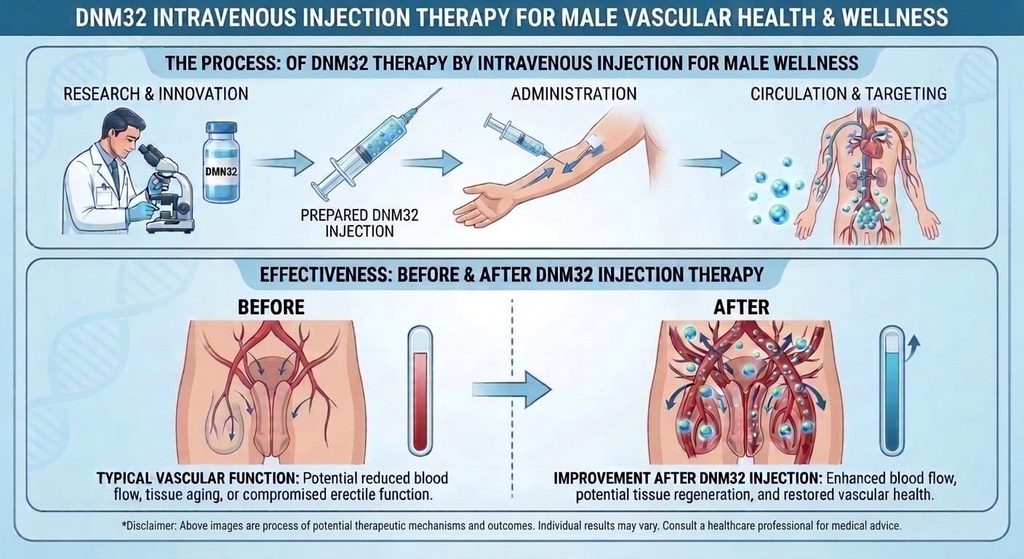
Rather than directly turning into new penile tissue, DNM-32 work primarily through paracrine effects. They secrete a “secretome” (growth factors and cytokines) that triggers the body’s natural healing mechanisms to:
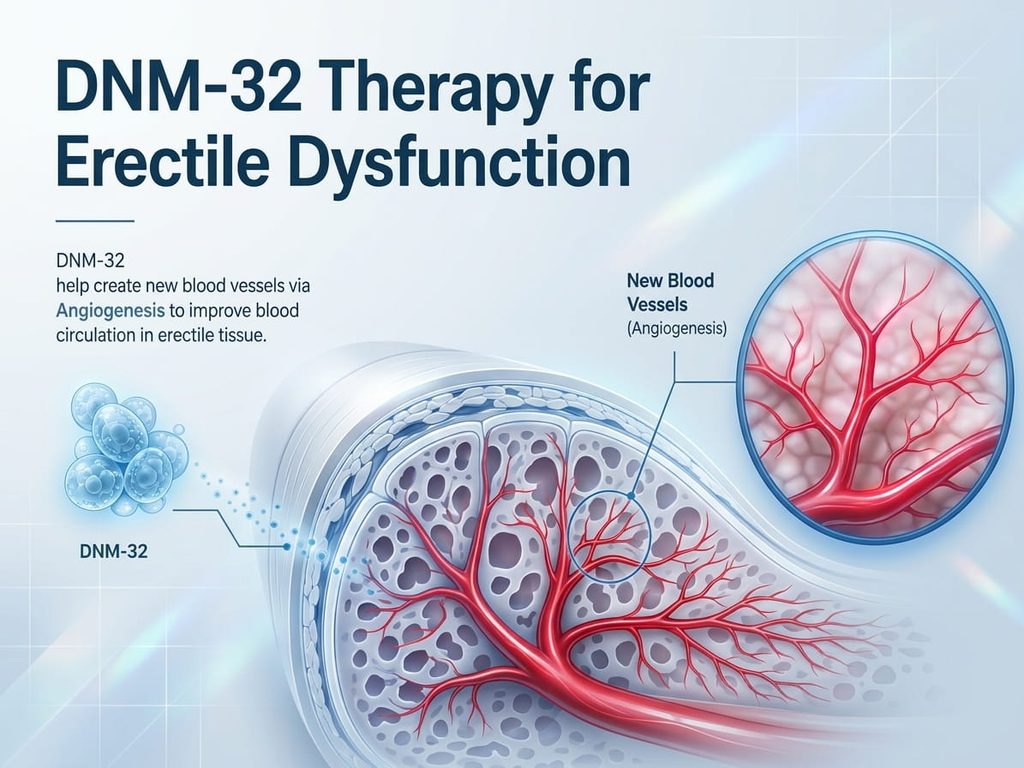
- Promote Angiogenesis: Regenerating damaged blood vessels to improve arterial flow.
- Nerve Repair: Helping to heal and regenerate damaged cavernous nerves.
- Anti-Fibrosis: Reducing tissue scarring and protecting existing smooth muscle cells from dying (apoptosis).
The clinical evidence indicates that DNM-32 therapy can significantly improve erectile function by repairing the physiological pathways responsible for achieving and maintaining an erection. DNM-32 act primarily through paracrine signaling—releasing growth factors and exosomes that stimulate the body’s own healing mechanisms. Clinical metrics from systematic reviews show that men undergoing DNM-32 therapy experience measurable, statistical improvements in overall sexual health.
DNM-32 release vascular endothelial growth factors (VEGF) to form new micro-vessels, increasing peak systolic velocity (PSV) and overall blood flow capacity. They exert neurotrophic effects that protect and regenerate damaged cavernous nerves, fixing the “electrical wiring” necessary to initiate an erection. The therapy reduces cellular apoptosis (cell death) and limits corporal fibrosis (the buildup of stiff scar tissue), maintaining the elastic smooth muscle necessary for blood retention
DNM-32 therapy targets the root cause of erectile dysfunction (ED) by repairing damaged biological tissue, unlike standard medications like Viagra or Cialis which only provide a temporary chemical boost to blood flow.
Why DNM-32 Is Considered Effective
- Paracrine Effects and Growth Factors: DNM-32 primarily work by releasing signaling molecules, cytokines, and growth factors. These factors trigger the body’s natural healing response.
- Neovascularization (New Blood Vessel Growth): DNM-32 promote angiogenesis, which rebuilds and rejuvenates damaged blood vessels in the penis to restore natural circulation.
- Nerve Regeneration (Neuroprotection): For ED caused by diabetes or nerve damage from prostate surgery, DNM-32 therapy helps support neural repair and recovery in the pelvic region.
- Restoring Smooth Muscle and Endothelial Function: It helps reverse fibrosis (scarring) and restores smooth muscle and endothelial cells, which are critical for regulating nitric oxide and achieving a firm, natural erection.
- Long-Term vs. Temporary Relief: Because it repairs physical and vascular structures over time, the effects can last significantly longer than the short-term window of oral ED pills.
Important Scientific Context
- Experimental Status: Major urological and sexual medicine organizations classify DNM-32 therapy for good for ED.
- Varying Results: Much of the data showing dramatic tissue regeneration by DNM-32.
How DNM-32 interventions improve spermatozoa viability and health
DNM-32 help improve sperm health and production through spermatogonial replacement, microenvironmental support, and cellular repair.
Clinical Role of DNM-32 in Supporting Male Fertility Parameters
- Spermatogonial DNM-32: These specialized DNM-32 reside in the testes and act as the foundational “seed” that continuously self-regulates and differentiates into mature sperm throughout a man’s reproductive life.
- The Microenvironmental Influence on Tissue Regeneration: Applying the “Seed and Soil” Framework: Mesenchymal DNM-32 (MSCs) harvested from sources like bone marrow or adipose (fat) tissue help repair damaged testicular structures, improve microcirculation, and restore the local cellular “soil” (such as Sertoli cells) needed for sperm to grow.
- Paracrine Signaling and Exosomes: DNM-32 and their secreted extracellular vesicles (exosomes) deliver growth-promoting factors and anti-inflammatory signals that lower oxidative stress, prevent cell death (apoptosis), and boost the function of developing sperm.
- Hormonal Balance: DNM-32 therapies can help stimulate or restore normal endocrine activity, regulating the hormones required for healthy, stable sperm synthesis.
Why DNM-32 demonstrates high efficacy in optimizing male fertility parameters
DNM-32 help make sperm healthy and restore fertility by repairing damaged testicular tissue and supporting the natural environment where sperm grow.
How DNM-32 Facilitates Healthy Sperm Development
- Direct Replenishment (DNM-32): Specialized precursor cells live inside the testicles and are responsible for lifelong sperm production. Transplanting or activating these cells helps rebuild the lining of damaged seminiferous tubules.
- Paracrine Support and Growth Factors: Mesenchymal DNM-32 and treatments like platelet-rich plasma (PRP) release protective signaling molecules, exosomes, and growth factors. These signals reduce cell death (apoptosis) and lower oxidative stress in the testicles.
- Restoring the “Seed and Soil”: For sperm to develop properly, the “soil” the local testicular microenvironment and supporting cells like Sertoli cells must be healthy. DNM-32 repair this supportive niche so the body’s natural “seeds” (germ cells) can mature into viable sperm.
- Improving Semen Quality and Motility: Therapy helps improve testicular microcirculation, hormone regulation, sperm morphology (shape), and swimming ability (motility).
Understanding the effectiveness of DNM-32 in improving sperm count
DNM-32 therapy helps increase sperm count and improve male fertility through biological regeneration, paracrine signaling, and repairing the testicular microenvironment.
The Molecular Mechanisms of DNM-32 in Spermatogenesis
- Regeneration of Spermatogenic Cells: DNM-32—particularly mesenchymal DNM-32 and spermatogonial DNM-32 can differentiate into or replace damaged structures within the testicles, directly restarting the cycle of sperm production.
- Improving the “Niche” (The Seed and Soil Concept): Testicular tissue relies on a supportive microenvironment. DNM-32 secrete growth factors, cytokines, and anti-inflammatory molecules that repair damaged “niche” cells (like Sertoli cells), making the environment healthier for existing sperm DNM-32 to thrive and divide.
- Paracrine Signaling: Instead of just turning directly into sperm cells, injected or activated DNM-32 release chemical signals that reduce local inflammation, lower oxidative stress, and stimulate the testicles’ natural healing processes.
- Boosting Existing DNM-32: In cases of low sperm count (oligospermia) or impaired function, DNM-32 therapy helps awaken or enhance the performance of remaining endogenous spermatogonial DNM-32 located in the seminiferous tubules.
Understanding the therapeutic effectiveness of DNM-32 in male infertility
DNM-32 therapy helps treat male infertility by repairing damaged testicular tissue and restoring normal sperm production.
Key Mechanisms of DNM-32 Effectiveness
- Regeneration of Spermatogenic Cells: DNM-32 (such as Mesenchymal or Spermatogonial) can replace or repair damaged cells inside the testicles, directly stimulating spermatogenesis (the creation of sperm).
- Paracrine Support and Signaling: Instead of just turning into sperm, DNM-32 secrete helpful proteins, cytokines, and exosomes. These signals reduce local inflammation and oxidative stress in the testicles.
- Microenvironment (“Soil”) Repair: According to regenerative medicine studies, improving the testicular microenvironment (the supporting “soil” like Sertoli and niche cells) allows dormant or surviving cells (“seeds”) to function and produce sperm again.
- Improved Semen Quality: By normalizing testicular function, treatments can help boost sperm count, improve sperm morphology (shape), and increase motility (movement).
Chemically Defined and Xeno-Free Approaches
DNM-32 therapy is not classified as conventional pharmaceuticals and is completely free of synthetic chemicals.
Adminitration
DNM-32 can be delivered (administered) intravenously via direct syringe injection or intravenous (IV) infusion.
Safety
DNM-32 has maintained a strong safety profile, with no reported side effects and no reported adverse events since its development and clinical introduction decades ago.
Disclaimer: The information provided above is for educational purposes only and should not be construed as medical advice. For the diagnosis, treatment, or management of any health condition, please consult a qualified healthcare professional.